Fruit tree
| Fruit trees | |
|---|---|
 | |
| Resource | Surface |
Fruit trees are tree species that produce edible fruit. These contrast with lumber trees, which are grown and harvested for wood.
Fruit trees produce a harvest every year after cycling through several stages: dormancy, flowering, fruiting, and ripe. They have strict growing requirements, but yield fruits with a long shelf life and in large amounts.
Finding fruit trees
Finding fruit trees through exploration can be challenging. Unless they are in the flowering stage, they can be difficult to distinguish from other trees inside a forest. Fruit trees have 3 distinct features: their leaf block pattern, leaf block color, and slimmer trunk.
-
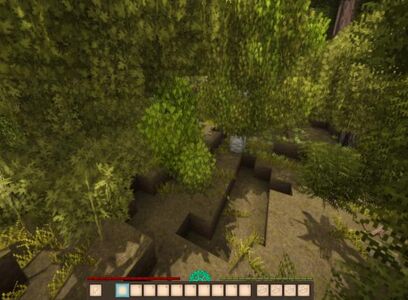 Fruit trees can be hard to spot in the middle of other trees.
-
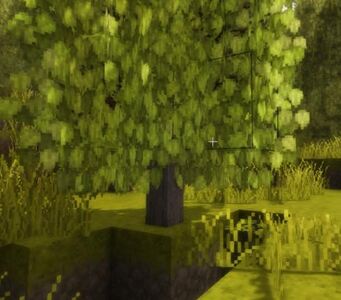 The stem of a fruit tree is slimmer than a full block.
-
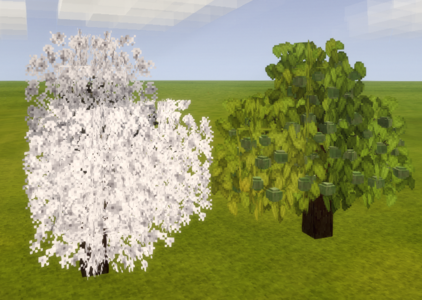 Flowering fruit trees contrast easily with their surroundings.
-
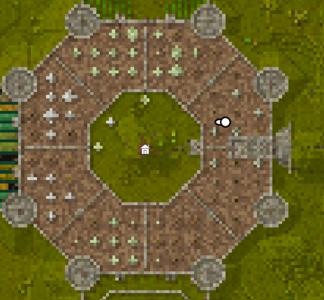 Fruit trees in various growing and seasonal stages as seen on a map. Their distinct cross shapes can get covered by other trees in a forest.


Fruit trees can be found in areas with the following temperature, precipitation,[1] and forestation.[2] These values represent the average climate in a year, which can be viewed by running the command /wgen pos climate.
| Species | Temperature (°C) | Rainfall | Forestation | |||
|---|---|---|---|---|---|---|
| Minimum | Maximum | Minimum | Maximum | Minimum | Maximum | |
| Red apple | -9 | 18 | 0.5 | 0.9 | 0.3 | 0.8 |
| Pink apple | -5 | 18 | 0.5 | 1 | 0.3 | 0.8 |
| Yellow apple | 0 | 22 | 0.6 | 1 | 0.3 | 0.8 |
| Peach | 10 | 17 | 0.55 | 1 | 0.3 | 0.8 |
| Pear | -10 | 19 | 0.5 | 1 | 0.3 | 0.8 |
| Cherry | 0 | 24 | 0.6 | 1 | 0.3 | 0.8 |
| Orange | 25 | 30 | 0.45 | 1 | 0.3 | 0.8 |
| Olive | 22 | 50 | 0.3 | 0.5 | 0.3 | 0.8 |
| Mango | 28 | 50 | 0.6 | 1 | 0.3 | 0.8 |
| Breadfruit | 28 | 50 | 0.6 | 1 | 0.3 | 0.8 |
| Lychee | 22 | 50 | 0.6 | 1 | 0.3 | 0.8 |
| Pomegranate | 22 | 50 | 0.3 | 0.7 | 0.3 | 0.8 |
Collecting fruit tree cuttings
A fruit tree consists of 3 block types: the stem, branches, and leaves. Fruit tree cuttings are used to grow new fruit trees, and can be acquired by breaking the branches with an axe. Branches drop 1 cutting each, mature stems drop 1 firewood each, and leaves drop nothing (unless they bear ripe fruit). Branches that have been removed have a chance to regrow every 5 days.
Growing fruit trees
Fruit tree cuttings can be planted on the ground to grow a new fruit tree, or grafted onto the stem of an existing fruit tree.
Planting fruit trees
Fruit tree cuttings can be placed on any soil, sand, or gravel. Cuttings have a 40% chance of taking root. If successful, the cutting will become a young tree stem and begin growing into a full tree. If unsuccessful, the cutting will die and drop 2 firewood when broken.
Grafting fruit trees


Fruit tree cuttings can be grafted onto pre-existing fruit trees. To do so, the host tree must have an "open cut": a segment of the tree stem that has a horizontal opening. This can be created by breaking a leaf and branch block that are horizontally adjacent to the stem. If the central block of the fruit tree still reads as a "branch" in the block info HUD, it is too young to attempt grafting there.
A cutting can be grafted by pressing Shift +  on an open cut, with a 60% chance of union. If successful, the cutting will become a grafted branch and begin growing a maximum of 6 leaf blocks of its respective species. While normal fruit trees' foliage extends a maximum of 2 blocks outwards from the stem, grafted branches' foliage can extend a maximum of 3 blocks outwards.
Grafted fruit tree branches retain their original species' temperature requirements and flowering behavior. For this reason, it is not recommended to graft fruit trees with drastically different temperature requirements. Even if the grafted branch survives, its flowering time might differ from the host tree and result in a mismatched seasonal appearance.
Temperature ranges
A fruit tree cutting's survival is only a matter of probability; its continued growth depends on whether it can withstand the changing temperatures throughout the year.
- Fruit trees can only grow when the temperature is at least 12°C at 12:00.[3]
- Very low temperatures can cause fruit trees to die from the cold, depending on the species. Because fruit trees' seasonal cycles occur on a yearly basis, it is recommended to check the area's lowest temperature before placing cuttings (in the northern hemisphere, the coldest day of the year is in late January at 04:00).
Temperature thresholds and times will vary randomly between individual trees. The tables below show average temperature thresholds, followed by the full range of randomization.
Fruit trees are divided into 2 categories: deciduous and evergreen.
Deciduous trees
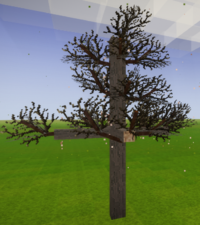
Deciduous fruit trees will enter dormancy when the temperature drops below freezing. While in the dormant stage, they undergo vernalization, a real-life process in which fruit trees must be exposed to the cold and then experience a warm day to flower. Vernalization requires a cumulative total of 220 to 280 in-game hours during dormancy. The fruit tree must have at least grown into a young stem—cuttings that have not yet taken root or united with a host tree cannot vernalize. When the requirements are met, the block info HUD will show "Dormant (Vernalized)."
Fruit trees will exit dormancy when the temperature rises. If vernalized, they will enter the flowering stage.
For example, a red apple tree must be exposed to temperatures between -7°C and 1°C to enter dormancy, and then be exposed to temperatures lower than 1.5°C to 2.5°C for 220 to 280 in-game hours to vernalize. When the temperature rises to between 14°C and 24°C, it will exit dormancy and flower.
| Species | Temperature (°C) | |||
|---|---|---|---|---|
| Die below | Vernalization | Enter dormancy | Exit dormancy | |
| Red apple | -28 (-38 to -28) | 2 (1.5 to 2.5) | -3 (-5 to -1) | 19 (14 to 24) |
| Pink apple | -24 (-34 to -24) | 3 (2.5 to 3.5) | -3 (-5 to -1) | 19 (14 to 24) |
| Yellow apple | -22 (-32 to -22) | 4 (3.5 to 4.5) | -3 (-5 to -1) | 19 (14 to 24) |
| Cherry | -20 (-30 to -20) | 5 (4.5 to 5.5) | -3 (-7 to 1) | 19 (14 to 24) |
| Peach | -12 (-22 to -12) | 5 (4.5 to 5.5) | -3 (-5 to -1) | 19 (14 to 24) |
| Pear | -28 (-41 to -28) | 2 (1.5 to 2.5) | -4.5 (-6.5 to -2.5) | 19 (14 to 24) |
Evergreen trees
Evergreen fruit trees do not undergo vernalization. Instead, they flower depending on the time of year. These species tend to be native to the tropics and are more susceptible to dying from the cold. Evergreen fruit trees cannot flower within the first 30 days after taking root or uniting with a host tree.[4] Afterwards, they can flower at any time within 13.5 days of the stated threshold below.[5]
| Species | Temperature (°C) | Flowering time | |
|---|---|---|---|
| Die below | Year relative | Date range | |
| Orange | 6 (1 to 6) | 0.5 (0.5 to 0.6) | 1 June to 2 July |
| Olive | 7 (2 to 7) | 0.3 (0.3 to 0.4) | 5 March to 7 April |
| Mango | 10 (6 to 10) | 0.2 (0.2 to 0.3) | 4 February to 5 March |
| Breadfruit | 10 (6 to 10) | 0.3 (0.3 to 0.4) | 5 March to 7 April |
| Lychee | 10 (6 to 10) | 0.3 (0.3 to 0.4) | 5 March to 7 April |
| Pomegranate | 10 (6 to 10) | 0.3 (0.3 to 0.4) | 5 March to 7 April |
Greenhouse
Fruit trees can be planted in a greenhouse and will receive a +5°C bonus to their detected temperature, affecting all thresholds accordingly (die-below, vernalization, and dormancy). Greenhouses can protect fruit trees that would otherwise die during winter. Additionally, greenhouses can allow fruit trees to reach the threshold for exiting dormancy and bear fruit earlier in the year.
A single greenhouse with the maximum floor dimensions of 14x14 can fit 5 fruit trees without overcrowding, with one in each corner and one in the center.
Growth stages
All fruit trees go through several stages of growth, reaching a maximum height of 6 blocks and a maximum width of 5 blocks. Growth is independent of the seasonal cycle, and mainly affects how many branch and leaf blocks there are to bear fruit. Fruit trees perform a growth calculation every 5 days, which can rarely vary from 4 to 6 days.[6] If the temperature is lower than 12°C at 12:00, or the tree is in the dormant stage, no change will occur until the next growth calculation.
- On the first successful calculation (5 days passed), nothing happens.[7]
- On the second successful calculation (10 days passed), a planted cutting has a 40% chance to become a young stem and grow 1 leaf block. A grafted cutting has a 60% chance of becoming a branch and growing 1 leaf block. If neither occurs, it will become a dead cutting.[8]
- On successful calculations thereafter, the tree has a chance of growing a stem, branch, or leaf block, possibly multiple blocks at once.
Each growth stage adds blocks either vertically or horizontally. Fruit trees alternate between growing 1 block taller and then several blocks wider until the full "volume" for their current height is reached. Individual trees can also randomly skip growing a branch, resulting in an uneven final appearance and a stem with fewer than the maximum number of cuts.
-
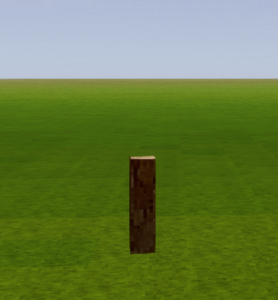 The humble beginnings. 40% chance to survive if planted by a player.
-
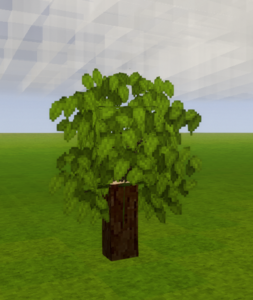 First growth stage. That one leaf block can potentially already bear fruit.
-
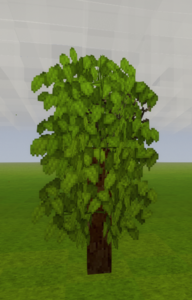 A growth stage can either be the tree getting taller...
-
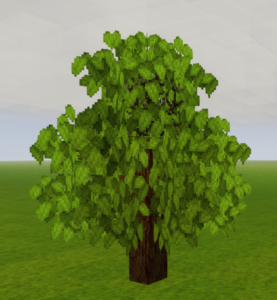 ...or filling out the leaf block spaces.
-
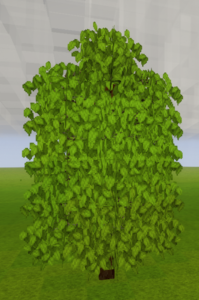 Once it has reached the max height of 6 blocks...
-
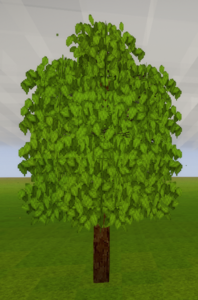 ...the lower leaf blocks will vanish...
-
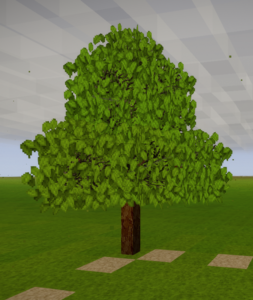 ...and it will instead grow in width to a maximum of 2 away from the stem.


Seasonal changes
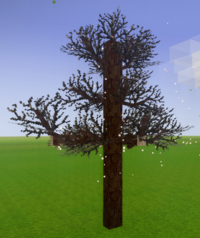
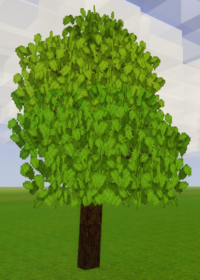
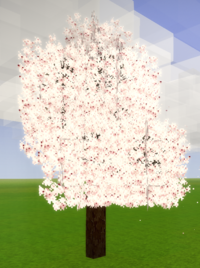
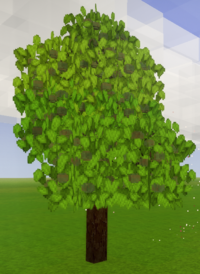
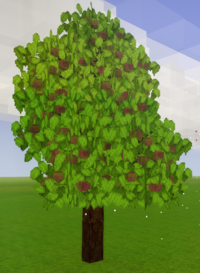
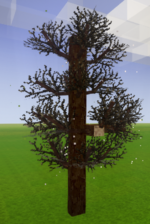
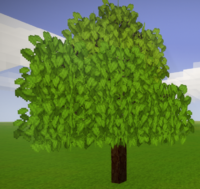
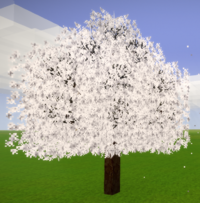
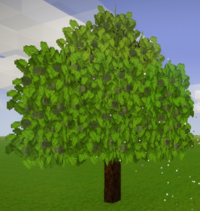
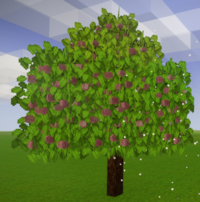
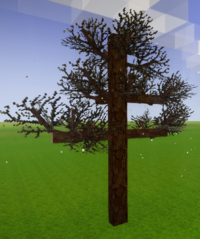
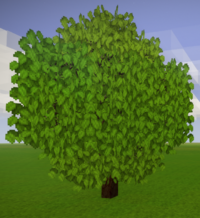
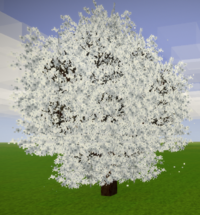
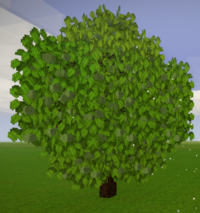
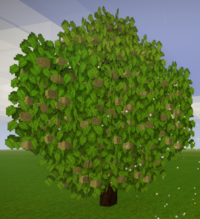
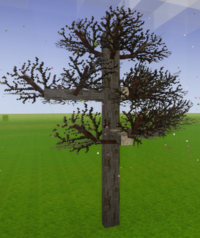
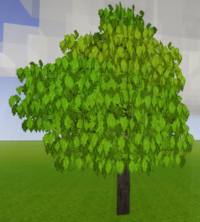
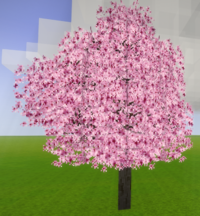
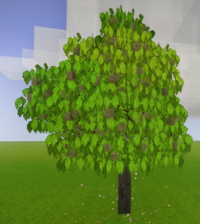
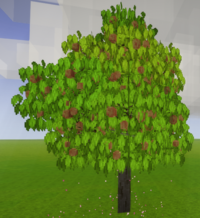
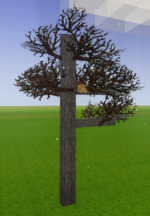
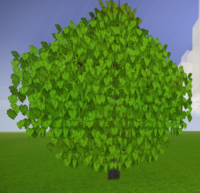
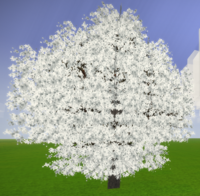
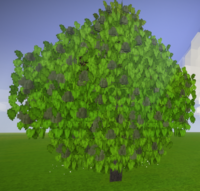
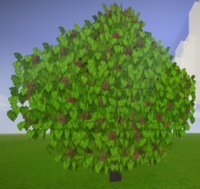
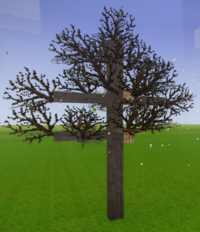
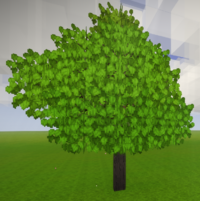
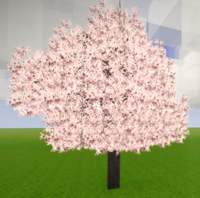
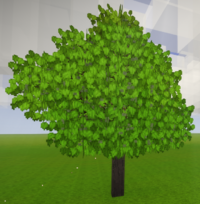
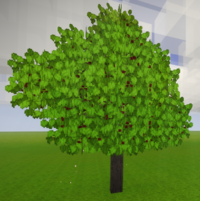
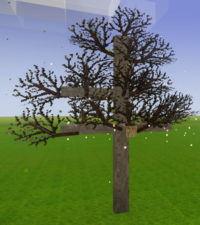
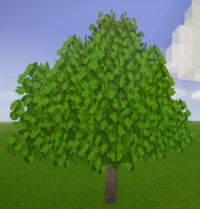
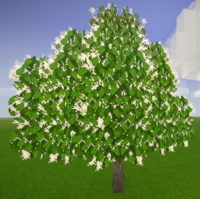
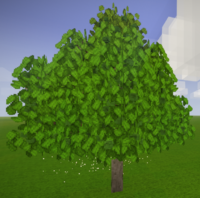
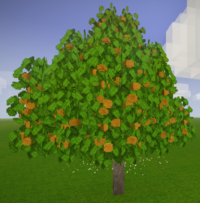
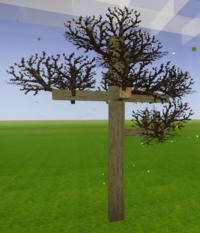
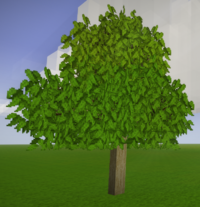
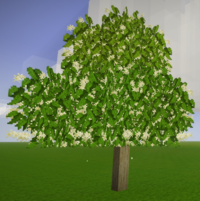
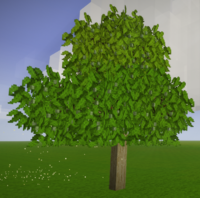
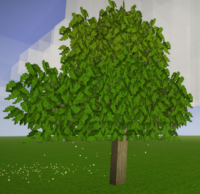
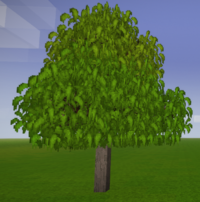
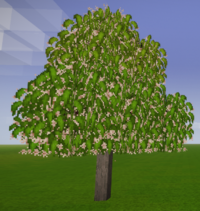
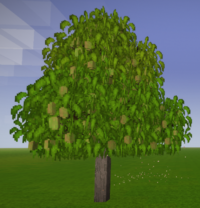
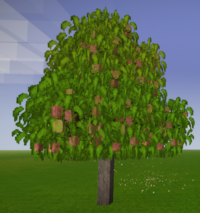
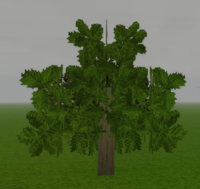
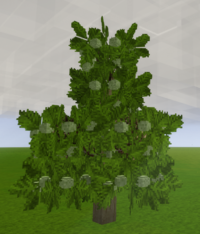
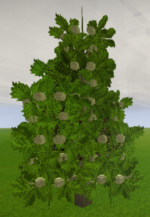
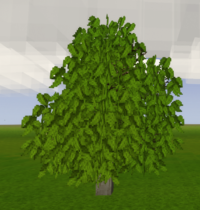
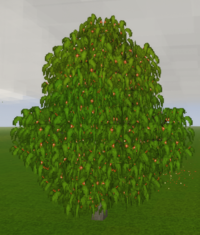
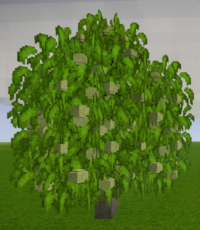
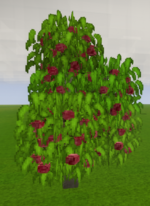
Deciduous trees have 5 seasonal stages: dormant, empty, flowering, fruiting, and ripe. Evergreen trees have only 4 stages, as they do not experience dormancy.
Fruit trees tick 3 times per day (every 8 hours in a default 24-hour day)[9] to evaluate whether to change seasonal stages, including dying from the cold. For deciduous trees, the dormancy and flowering stages are triggered by temperature. For evergreen trees, the flowering stage is triggered by the time of year. Vernalization progress is evaluated under this tick rate; if the temperature measured at that time is within the vernalization range, 8 hours are added to the counter.[10]
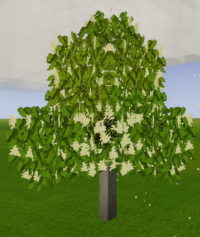
Once fruit trees enter the flowering stage, the following stages last a fixed number of days, as shown in the block info HUD. This includes the ripe stage—if fruits are left unharvested by the player, the tree will automatically revert to being empty.
| Species | Stage length (days) | Dormant | Empty | Flowering | Fruiting | Ripe |
|---|---|---|---|---|---|---|
| Red apple | Flowering: 3-6 Fruiting: 18 (18-30) Ripe: 12 (12-22) |
|
|
|
|
|
| Pink apple | Flowering: 3-6 Fruiting: 21 (21-33) Ripe: 9 (9-19) |
|
|
|
|
|
| Yellow apple | Flowering: 3-6 Fruiting: 23 (23-35) Ripe: 10 (10-20) |
|
|
|
|
|
| Peach | Flowering: 3-6 Fruiting: 17 (17-27) Ripe: 8 (8-16) |
|
|
|
|
|
| Pear | Flowering: 3-6 Fruiting: 20 (20-32) Ripe: 28 (28-38) |
|
|
|
|
|
| Cherry | Flowering: 3-6 Fruiting: 11 (11-19) Ripe: 9 (9-19) |
|
|
|
|
|
| Orange | Flowering: 3-6 Fruiting: 60 (60-72) Ripe: 12 (12-22) |
|
|
|
|
|
| Olive | Flowering: 3-6 Fruiting: 40 (40-52) Ripe: 24 (24-34) |
|
|
|
|
|
| Mango | Flowering: 3-6 Fruiting: 50 (50-62) Ripe: 10 (10-20) |
|
|
|
|
|
| Breadfruit | Flowering: 3-6 Fruiting: 50 (50-62) Ripe: 10 (10-20) |
- | 
|

|
|
|
| Lychee | Flowering: 3-6 Fruiting: 50 (50-62) Ripe: 10 (10-20) |
- | 
|
|
|
|
| Pomegranate | Flowering: 3-6 Fruiting: 50 (50-62) Ripe: 10 (10-20) |
- | 
|
|
|
|
Harvest
- For cooking and other usages, see Fruit.
Fruit trees can be harvested by pressing on blocks containing ripe fruit, leaving behind empty leaves. The harvest amount is somewhat random, as shown in the table below.
| Icon | Item | Satiety | Fresh time (days) | Harvest per block |
|---|---|---|---|---|
 |
Red apple | 80 | 40 | 4 (4-8) |
 |
Pink apple | 80 | 40 | 6 (6-10) |
 |
Yellow apple | 80 | 40 | 5 (5-9) |
 |
Peach | 80 | 2 | 5 (5-9) |
 |
Pear | 80 | 40 | 5 (5-9) |
 |
Cherry | 40 | 2 | 8 (8-12) |
 |
Orange | 80 | 15 | 5 (5-9) |
 |
Olive | 100 | 21 | 4 (4-8) |
 |
Mango | 80 | 15 | 4 (4-8) |
 |
Breadfruit | 200 | 40 | 3 (3-7) |
 |
Lychee | 40 | 15 | 8 (8-12) |
 |
Pomegranate | 80 | 15 | 5 (5-9) |
Notes
- Growth times are given based on the default 9-day month and scale with changes to month length.
- To obtain an approximation of an area's yearly temperatures for planning, the command
/debug exptempplotcan be run to export a graph to the main installation folder, such as %AppData%\Roaming\Vintagestory\temperatureplot.csv.
- Deciduous trees gain additional cold resistance while dormant, and can survive temperatures 3°C below their stated die-below threshold.[11]
History
| Version | Description | |
|---|---|---|
| 1.16.0 | pre.1 | Fruit trees were introduced. |
| rc.1 | Breadfruit, lychee, and pomegranate species were added. | |
| rc.4 | A new foliage tint for olive trees was added. | |
| 1.16.4 | rc.2 | The survival rate of planted cuttings was increased from 25% to 40%. |
| The growth speed of fruit trees was increased by 37%. | ||
| 1.17.0 | pre.1 | The "processCrops" world configuration was added, making it possible to disable fruit trees growth. |
| 1.17.4 | The vernalization temperature for pink apple, yellow apple, cherry, and peach trees was increased. | |
| 1.18.4 | The speed of fruit tree ticks was greatly increased. Cold resistance for dormant deciduous trees was added. Adjusted the fruiting time of peach trees to be earlier. | |
| 1.20.10 | The survival rate of grafted cuttings was increased from 50% to 60%. | |
References
- ↑ Lines 14 to 25 of %AppData%\Roaming\Vintagestory\assets\survival\blocktypes\plant\fruittreebranch.json
- ↑ Lines 191 to 192 of "%AppData%\Roaming\Vintagestory\assets\survival\worldgen\blockpatches\other.json
- ↑ Line 116 of FruitTreeGrowingBranchBH.cs
- ↑ Line 30 of FruitTreeRootBH.cs
- ↑ Line 180 of FruitTreeRootBH.cs
- ↑ %AppData%\Roaming\Vintagestory\assets\survival\blocktypes\plant\fruittreebranch.json
- ↑ Line 182 of FruitTreeGrowingBranchBH.cs
- ↑ Lines 197 to 210 of FruitTreeGrowingBranchBH.cs
- ↑ Line 28 of FruitTreeRootBH.cs
- ↑ Line 324 of FruitTreeRootBH.cs
- ↑ Line 164 of FruitTreeRootBH.cs
| Farming | |
|---|---|
| Wild foods | Berries • Cactus (saguaro) fruit • Mushrooms • Cattail (and papyrus) |
| Grains | Amaranth • Cassava • Flax • Rice • Rye • Spelt • Sunflower |
| Vegetables | Cabbage • Carrot • Onion • Turnip • Parsnip • Peanut • Pumpkin • Soybean |
| Fruits | Fruit trees • Pineapple |
| Other | Fertilizer • Beekeeping • Room |
| Tools | Hoe • Scythe • Fruit press |
| See also | Animal husbandry • Cooking • Food preservation |
| Wiki Navigation | |
|---|---|
| Vintage Story | Guides • Frequently Asked Questions • Soundtrack • Versions • Controls |
| Game systems | Crafting • Knapping • Clay forming • Smithing • Cooking • Temperature • Hunger • Mining • Temporal stability • Mechanical power • Trading • Farming • Animal husbandry |
| World | World generation • Biomes • Weather • Temporal storms |
| Items | Tools • Weapons • Armor • Clothing • Bags • Materials • Food |
| Blocks | Terrain • Plants • Decorative • Lighting • Functional • Ore |
| Entities | Hostile entities • Animals • NPCs • Players |
| Miscellaneous | List of client commands • List of server commands • Creative Starter Guide • Bot System • WorldEdit • Cinematic Camera • Adjustable FPS Video Recording • ServerBlockTicking • Adding Mods • Troubleshooting Mods |


